
Jean’s Struggle to Remain Indispensable
Les Choses humainesThis thread follows Jean Farel’s effort to preserve his television authority as age, professional rivals, public scandal, and changing expectations undermine his carefully maintained status.
increasing Bearing strength in each event
 decreasing
Bearing strength in each eventdecreasingThe Ritual of Staying Young

A Career Against Decline
The body as a professional asset
Jean Farel treats longevity as a central personal project. He trains with a coach, follows strict dietary rules, undergoes cosmetic procedures, and submits to regular medical checks, all in the hope of remaining physically capable and visibly authoritative on screen.
His routines are not merely about health. They help him sustain the image of a man who is still energetic, admired, and able to command a daily audience, despite knowing that his body is aging.
Fear concealed as discipline
Jean claims to have a naturally robust constitution, but his attention to measurements and medical results reveals deep anxiety about decline. He has suffered a minor stroke and now avoids the risks of live broadcasting, even as he refuses to contemplate leaving television.
The contrast defines his professional predicament: he can acknowledge every sign of vulnerability privately, but his public identity depends on appearing untouched by it.
The Threat from Ballard

A Seat Under Pressure
An old host meets a new director
Francis Ballard tells Jean that the ratings for Grand Oral are not strong enough and that the program may soon be discontinued. Jean hears the proposal as a direct judgment on his age and on the authority he has spent decades establishing.
Ballard frames the change as renewal rather than personal rejection, but his casual remarks about older television figures make the threat unmistakable. Jean knows that respected predecessors can lose their positions and their social standing almost overnight.
A rivalry becomes personal
Jean answers with confidence in his audience and his record, insisting that he has outlasted previous directors. Ballard counters that the media landscape is changing and that past success cannot guarantee a permanent place.
The meeting leaves Jean with a new sense of exposure just before he is due to receive a major national honor. His public triumph and professional insecurity now occupy the same day.
An Award and a Public Humiliation
Recognition and Reversal
A carefully staged honor
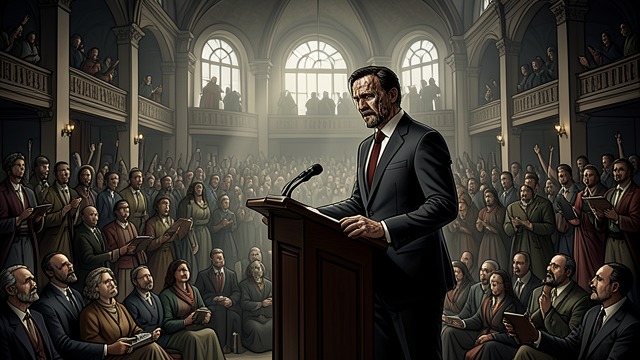
Jean has arranged an elaborate ceremony at the Élysée Palace, inviting leading figures from politics, business, and culture. The event confirms his proximity to national power and gives him an audience before whom he can present himself as an accomplished professional and devoted father.
But a hostile profile published in the newspaper where Françoise Merle works punctures the image he hoped to celebrate. Its author quotes a close friend calling him a “human piece of shit,” and Jean experiences the article as betrayal and public exposure rather than criticism.
The performance continues
Jean confronts Françoise by phone, then resumes the role of confident host when the ceremony begins. Even after learning that Françoise has attempted suicide, he cannot bring himself to stop the event or abandon the presidential proceedings.
The episode reveals the cost of his dependence on recognition: he can be privately shaken, but he still chooses to complete the public performance. The medal momentarily enlarges his prestige while the article exposes how fragile that prestige has become.
The Broadcast and the Backlash

A Brief Professional Reprieve
Ratings restore confidence
Jean’s interview with the interior minister draws an exceptional audience. Ballard calls to congratulate him and withdraws his threat to end Grand Oral, allowing Jean to interpret the ratings as proof that his position remains secure.
Jean quickly turns the success into a public message, posting a photograph and figures on Twitter. The announcement lets him reclaim the image of a thriving host at the very moment his private life is unsettled.
Visibility carries new risks
Soon afterward, two helmeted men knock him down in the street. Jean refuses immediate help and checks whether anyone photographed the incident, revealing that reputation management remains instinctive even when he may have been attacked deliberately.
He continues to work, but the contrast between his polished broadcasts and bodily vulnerability sharpens. Success has restored his program for now; it has not returned his sense of control.
Suspension and a Conditional Return

The Career Is Recast
The son’s trial reaches the screen
After Jean publicly describes rape as “twenty minutes of action,” Ballard suspends his program and tells him to leave the channel. Jean treats the decision as another attempt to remove him, insisting that his long record and audience should protect him.
Ballard answers that the remarks have made Jean’s position untenable. The exchange brings together the professional forces Jean has resisted for years: declining ratings, institutional change, and a public less willing to accept the language of powerful men without consequence.
A new invitation tests the old ambition
After the verdict, the new director of programs offers Jean a live political interview in a coveted late-night slot. The opportunity restores the prospect of on-air influence, but it also demands a choice about whether he can risk another high-profile failure.
Jean hesitates and considers that his career may need to end, yet the promise of returning to direct broadcasting still exerts a strong pull. His professional story remains unresolved at the close, balanced between exhaustion and renewed appetite for the public stage.
At age seventy, before the 2016 awards ceremony
January 2016, before Jean’s award ceremony
The evening of Jean’s Légion d’honneur ceremony
The morning after the award ceremony
During Alexandre’s trial, roughly two years after the accusation
